From Mike’s Desk
I wanted to give a quick thank you to everyone who showed up for our August AIA/IDCEC webinar. With over 50 people in attendance, I was very happy with all the questions and interaction this presentation generated.
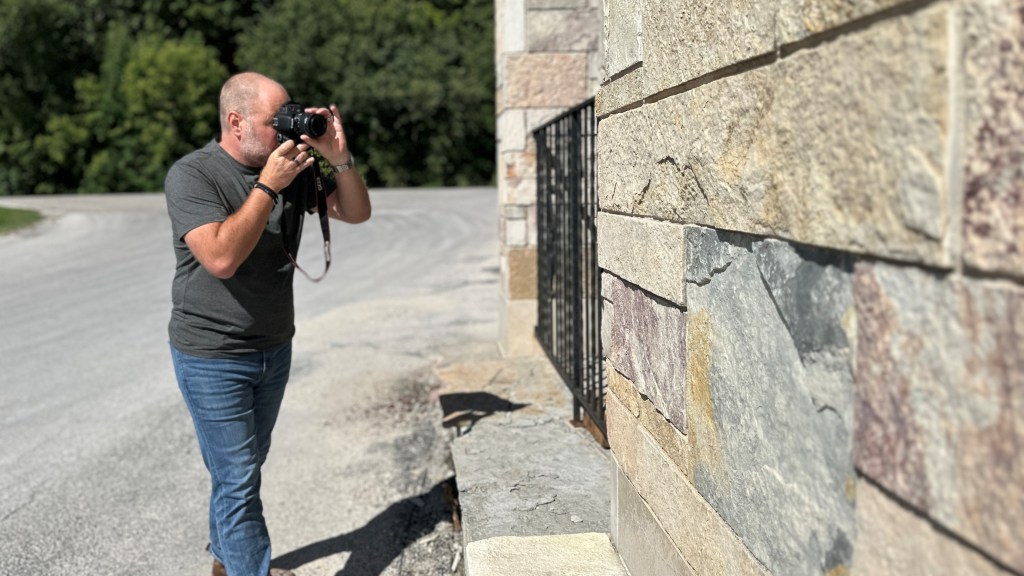
Holding our Canon EOS REBEL T7i makes me a photographer… at least in my head… or at least it used to. Now, as we put more effort into highlighting projects of influence, it has become very apparent to me that there is a big difference between a good camera and a good photographer.
When we started with Stone Journal, I thought I understood what makes a project visually interesting. I quickly learned and appreciated how little I really knew. A beautiful project photographed poorly can fail to capture the craftsmanship and design that made it special in the first place.
Over the years, I’ve taken plenty of photos of stone, projects, our quarries, and the places I visit. Like most people, I can point a camera at something I think looks interesting and hopefully come away with a decent picture; there is so much more to it.
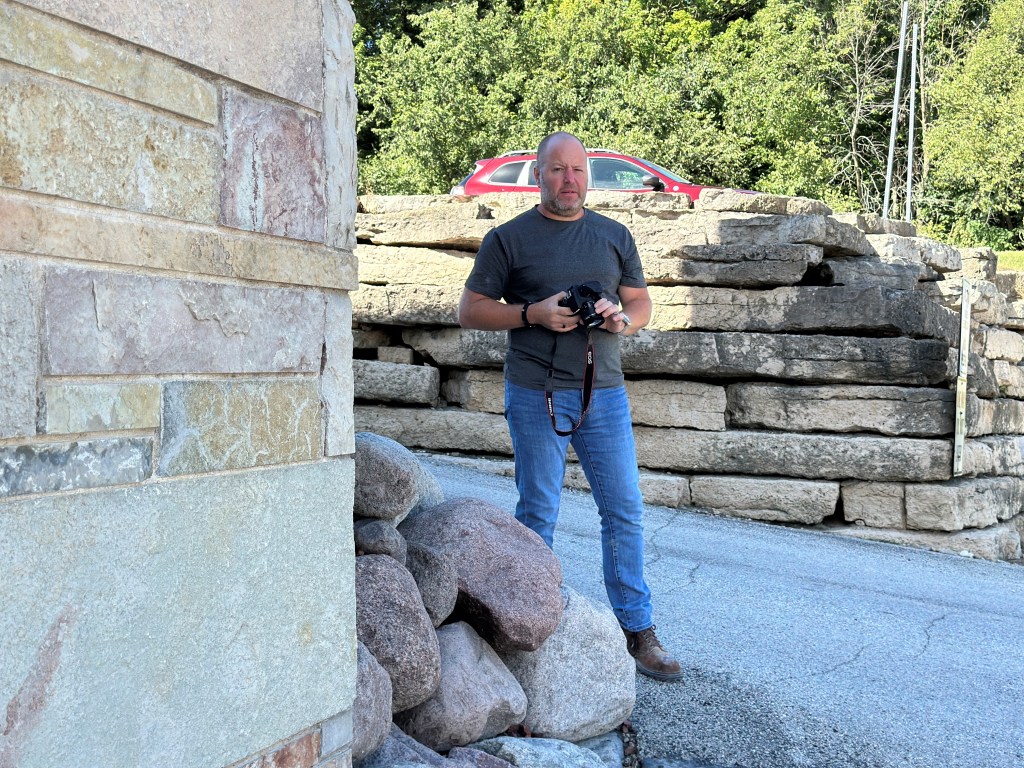
The more time I’ve spent around professional photographers and the work they do, the more I’ve come to appreciate just how different that is from taking a picture. It’s something I didn’t fully appreciate until I started seeing the same projects through their eyes.
When I walk up to a wall of stone I see a texture or color I want to capture. A professional photographer is thinking about the light, the angle, the time of day, what’s in the background, what shouldn’t be in the background (always look for that straggling ladder or hose), how the image is composed—and, maybe most importantly, what story the photograph is supposed to tell.
The building industry spends an incredible amount of time creating beautiful things. An architect may work on a home for years. A designer considers details most of us may never notice. Masons, carpenters, and landscapers may put months, even years, into bringing those ideas to life. Even the stone itself represents an enormous amount of work before it ever reaches the jobsite. Yet for most people, their only experience with that finished project will be through the eye of the photographer.
UPCOMING WEBINAR TO ELEVATE YOUR PROJECTS – OCT. 1

I am very excited about our next Stone Journal Design Conversations webinar: Architectural Photography Planning: Scheduling, Styling, and Capturing Design Intent. I’ll admit, architectural photography might not immediately sound like a topic that applies to everyone in the building industry, but I think that’s why this conversation could surprise people.
This isn’t simply about how to take a better picture. It’s about everything that happens before the camera comes out.
- When should photography become part of the project plan?
- How do you choose the right photographer?
- What needs to happen before shoot day?
- How much does styling matter?
- What happens when the weather doesn’t cooperate?
- What about contracts and image rights? (This is one that was really interesting for me to learn about).
- How does a photographer understand what the architect or designer was actually trying to accomplish?
Those are things I wouldn’t necessarily think about when I’m standing there with a camera in my hands. That’s exactly why I’m excited for you all to hear the answers.
We’re bringing together professional architectural photographers for this conversation, and I’m looking forward to hearing not only how they photograph great architecture, but how they see it differently than the rest of us. Because after spending more time around professional photography, I’ve learned something pretty simple:
A great project deserves more than a good picture.
People Behind the Stone: 20 Years of Operation in the CMF
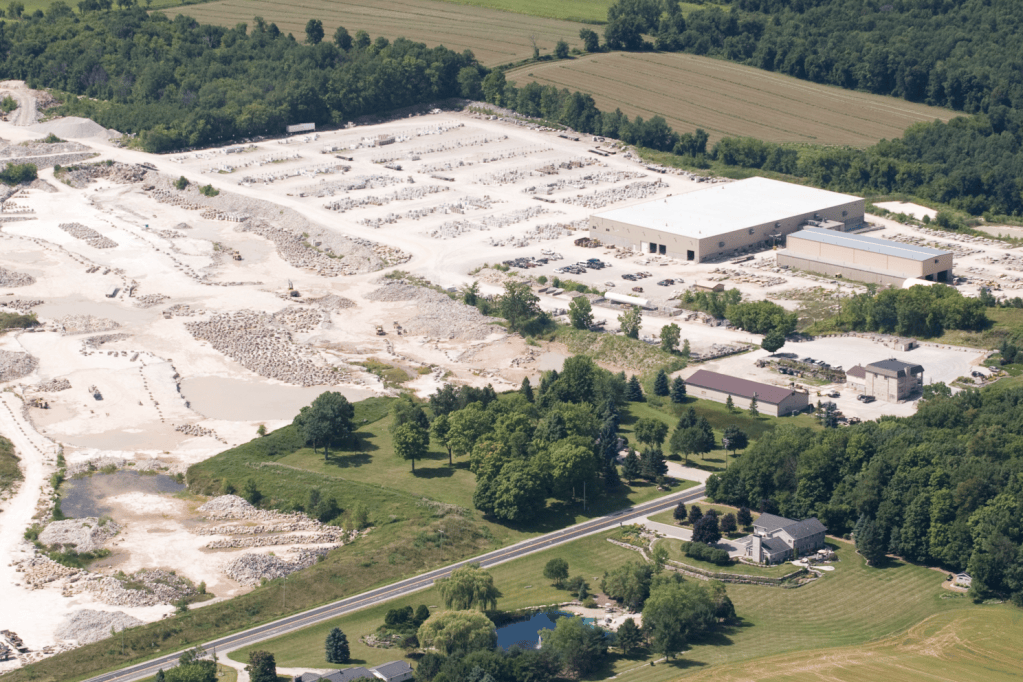
This year marks 20 years since we opened our Chilton Manufacturing Facility—or CMF, as we call it. It was a pivotal moment in the company’s history and one that I wanted to make sure others got to know more about.
Before this new production facility, we had production spread across multiple locations. Different crews sometimes did things in different ways, material moved from place to place, and there were a lot of moving pieces. Bringing everything together created efficiencies, but listening to people talk about those early days reminded me that the CMF changed much more than how we processed stone. It changed what coming to work looked like.
Some of the stories are funny now, like guys using garbage bags as rain jackets (which is something I had done often!), but they also remind you how far we’ve come. This building gave our rockstars better workspaces, locker rooms, bathrooms, a real break room, dust collection, lift tables, and equipment designed around doing the job better.
At the time, it was a big investment and a big risk. Nobody knew exactly how it would turn out – even Tim and Scott, but looking back 20 years later, it’s pretty easy to see that the CMF helped set the stage for much of what Buechel Stone has become today.
A building can be replaced. Equipment can be upgraded. Processes will continue to change. But you don’t create that kind of history without people who care about what they’re doing and take pride in the place where they do it.
Lamont’s thought near the end of the video captures People Behind the Stone better than anything I could write.
My wife used to ask me, why do you like it so much? I just say that long after I’m gone, 200 years down the line, the stone that I helped process, and I helped put on the pallet, that I cut, it’s still going to be on the building somewhere.”
– Lamont Martin, 25+ years with Buechel Stone and current Rolling Rockstar Transit driver
That’s a pretty remarkable thing to think about, and it’s a common theme from others. Twenty years from now, the CMF may look different than it does today. Maybe there will be different processes and ways of producing stone that we haven’t even thought of yet, but the stone and the work of the people who put their hands on it will outlast all of us.
That’s something worth celebrating.
Closing Thought
One of the things I enjoy about putting A Stone’s Throw together is that it gives me a reason to stop and appreciate things I might otherwise pass by. We spend a lot of our days focused on what’s next—the next project, the next order, the next improvement. Every once in a while, it’s worth looking at what’s already around us and appreciating the people, craftsmanship, and details that make it special.


Leave a Reply